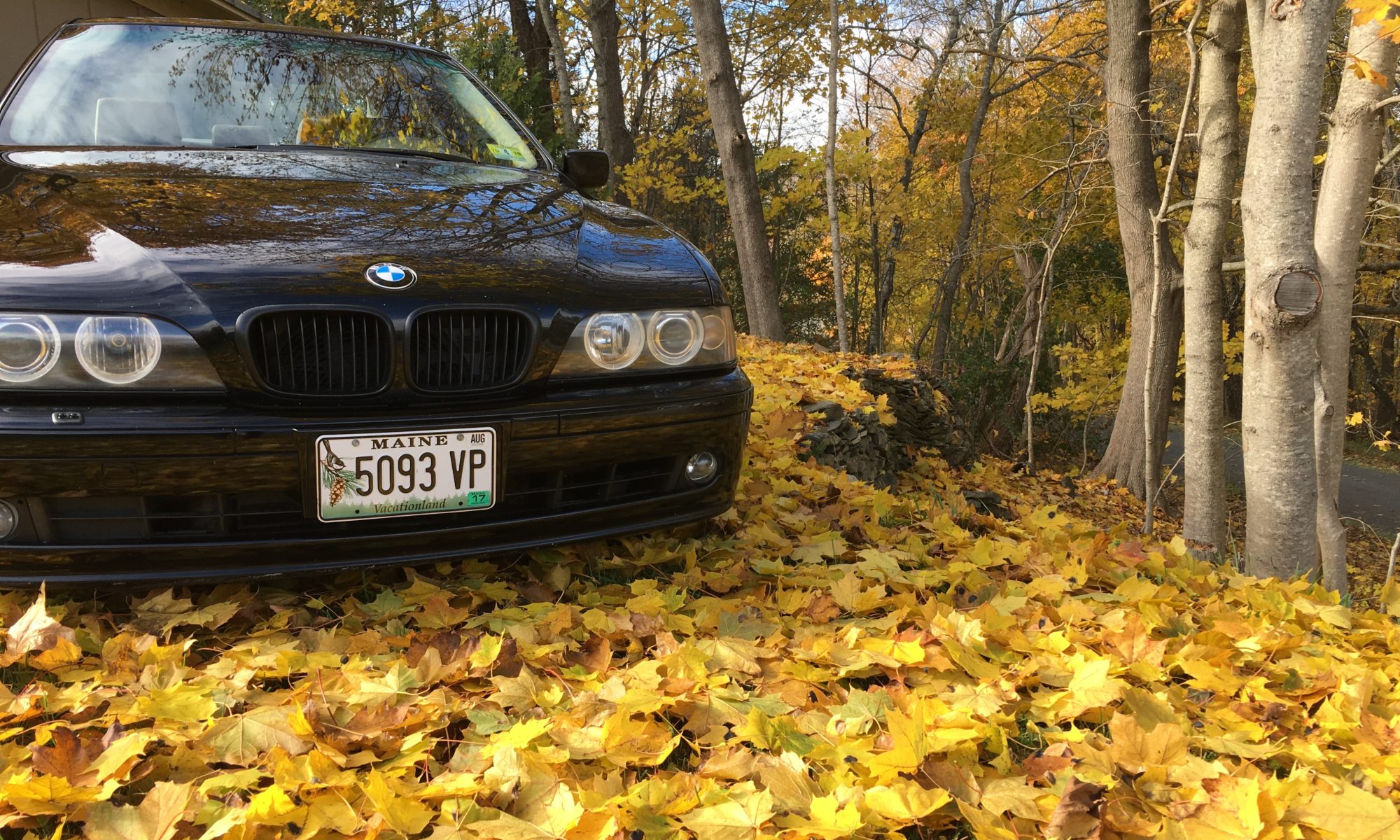
Leaky valve cover gaskets (aka VCG) are probably one of the most common problems with older BMWs. The E39 is no exception. When the problem gets bad enough, oil will leak into the exhaust manifold, where it will smoke and is a fire hazard. So, when I noticed oil smoke in the engine bay of my E39, I decided the VCG was past due for replacement. And what better opportunity to do the VANOS seals while everything is opened up? So, that is exactly what I did.
VANOS is to BMW as V-TEC is to Honda. Essentially, the VANOS unit adjusts the engine timing to improve drivability and performance. The VANOS unit has two pistons, one for each of the camshafts. These pistons have seals, and these seals are what go bad. Quickly. From the BMW factory in Germany, buna-n rubber seals were used. This material the opposite of ideal for this application, and this leads to their early failure. As a result, this job is considered by many BMW enthusiasts as a good way to regain lost performance.

I began the job on a Friday night by removing the engine cover, coils, and valve cover. This was all very simply, although I had previously had trouble removing a stuck cap nut that held the valve cover down. Once the valve cover gasket was removed, it was time to remove the VANOS unit.

I was also surprised at the simplicity of the work. Compared to suspension work, or even brake work, the VANOS unit removal was very simply. It required the use of an 8mm hex socket, as well as needle nose pliers, a torx bit, and some sockets. Previously, I had also disconnected four electrical connectors for the VANOS solenoids, etc. Once removed, I took out both of the VANOS pistons to gain access to the worn seals. This is where my work ended for the night.
The next morning, I got up early to continue where I’d left off. I began by cutting out the old VANOS seals using an X-Acto knife. In order to get the new seals in the grooves (two seals in each of the four grooves), I had to soak them in warm water, as the teflon (the new material of the seals) was cold and stiff. Once warmed, I was able to stretch the new seals into place. It was now time for reassembly.

First, I put the pistons back into the VANOS unit. This involved removing and replacing them a few times to get the new seals to resize to the correct size. Once this was completed, I put in a new gasket between the VANOS unit and the head. I had cleaned the VANOS unit and the head mating surfaces with brake cleaner previously, so everything was ready to go back together. I slid the VANOS unit back onto the head studs and torqued it down. I then plugged in all of the electrical connectors. It was time to put the valve cover back on. I put new gaskets on the valve cover and put some gasket sealer on the head surface in the corners where the gasket might have trouble sticking. I then aligned the cover and placed it on the head, taking care to not trap any wires at the back of the engine. I then replaced the cap nuts and rubber grommets that hold down the valve cover. I torqued these down, replaced the coil packs, replaced the engine cover, and was ready to rumble. It was time to start the car.

Immediately the car fired to life. Pulling out of the garage, I already noticed an improvement in low-end power, as fewer revs were needed to move. I took the car around the block, and working the clutch became much easier. I couldn’t believe the difference replacing the seals had made.
Completing a project like this feels really good. It is so satisfying to fix something or make something better that I felt like jumping right into the next project. I even stated to my mom that I fee comfortable doing even more complex repairs, and said that, if I had to, I would drop the transmission and replace the clutch myself. A few days later, the ‘high’ has worn off and I’m not actually so sure that I could have as much success with removing the transmission as I did with this last job, but who knows. Luckily, my clutch doesn’t seem to be requiring replacement.

 Exhaust Fumes